YOGA NIDRA TRAINING · UK
Online Yoga Nidra and Deep Relaxation Teacher Training
Training begins 15 January 2027. Enrolment open.
Explore the curriculum →Online 50-Hour Yoga Nidra and Deep Relaxation Teacher Training for yoga teachers, therapists, healthcare professionals, coaches, and anyone who wants to teach deep relaxation with confidence.
Combining the classical Yoga Nidra tradition with modern neuroscience, somatic practice, and trauma-sensitive teaching. For practitioners who want practical skills, professional confidence, and the ability to adapt each session to the person in front of them.
Trusted by over 150 graduates · YAUK Accredited
A word from Laurent
Two traditions, one adaptable practice
If you want to deepen your knowledge of Yoga Nidra and relaxing breathwork, or to explore calming meditative techniques and support your own health or that of others, you are in the right place.
After two decades of teaching relaxation to very different groups, I have learned that no single approach works for everyone. We are all different, and our needs change throughout our lives. A room full of experienced practitioners needs something quite different from a room of people who have never lain still for thirty minutes, or who live with anxiety.
I built this training around that observation, and around how differently people understand rest in their bodies and in their heads. For some, classical Yoga Nidra feels too abstract. For others, a purely modern approach feels stripped of depth and warmth.
So how do we work with both, and learn to adapt or combine these techniques for the people in front of us?
This 50-hour professional course is built on adaptability. One strand follows the classical Yoga Nidra tradition: its structure, philosophy, imagery, language, and the stages as they were shaped centuries ago. The other examines deep relaxation through what we now understand about the nervous system, neurobiology, and brain waves.
You learn to draw on either, or to blend them within the same session, depending on who is in front of you.
What both strands share is simple. The student lies down and listens, and your job is to know exactly what you are offering and why, so that you can guide them with steadiness rather than read from a script you do not fully understand.
I teach towards accurate, sustainable results, and I steer clear of promises that cannot be kept.
Thank you, Laurent
What makes it different
Learning to guide deep rest with clarity and care
This training explores the origins and structure of classical Yoga Nidra, taught for centuries and formalised in the twentieth century by the Bihar School of Yoga, alongside the modern relaxation, grounding and meditation techniques that developed from it.
It is designed for every level, from someone who has never taught relaxation to the most experienced practitioner. You will finish able to teach Yoga Nidra and other relaxation techniques straight away, having made your own recordings and received feedback on them.
You will also build your own regular practice alongside the training, because teaching this material well starts with knowing it in your own body. By the end you will be able to guide others through deep rest in both private and group settings, with the structure and confidence to adapt on the spot rather than lean on a fixed script.
Laurent's distinctive teaching and mentoring expertise
Non-dogmatic blend of modern methods and ancient techniques
Flexible and accessible live online learning
One year access to your digital learning portal
YAUK certified — trusted by over 150 graduates
Affordable investment, premium value
Who this training is for
Built for anyone who works with people
Yoga and Movement Teachers
Bring Yoga Nidra, deep relaxation and meditation into your classes, workshops and retreats, and develop your own voice rather than working from someone else's script.
Complementary Therapists
Add a structured, teachable tool for deep relaxation that sits alongside the hands-on work you already do.
Psychotherapists and Counsellors
Learn techniques that complement your therapeutic approach, supporting clients with relaxation, stress reduction and self-awareness.
Healthcare Professionals
Nurses, physiotherapists and wellbeing leads looking for a non-invasive way to help patients and clients rest and manage stress.
Coaches and Corporate Wellness Leads
Integrate Yoga Nidra into one-to-one sessions, group programmes or workplace wellbeing, giving people a practical tool for pressure, transition and burnout.
Curious Beginners
No prior experience needed, and no requirement to be a teacher already. If you want to develop genuine competence in this work, this training will meet you where you are.
Course dates and times
January 2027
Session times
All sessions are delivered live via Zoom.
Every lecture is recorded and uploaded to the learning portal, where it stays available for one year.
Places are limited to 14 participants, so that the group stays workable for individual feedback and breakout rooms.
Course curriculum
Inside the programme
Weekend 1
Letting go, grounding, and the nervous system
Weekend 2
Neuroscience, internalisation, voice, and stages one and two of Yoga Nidra
Weekend 3
Somatic education, awareness, autogenic training, and stages three to five of Yoga Nidra
Weekend 4
Emotional support, and stages six to eight of Yoga Nidra
What each weekend looks like
Each weekend pairs a Friday and a Saturday, covering the same ground from two different angles.
Friday is body-based. Somatic education, restorative yoga, grounding bodywork and breathwork to prepare the body for deep rest, alongside the modern evidence-based material on the physiology of rest and what current research supports.
Saturday moves into the classical material from the Bihar School of Yoga lineage: the sequence and the language it was built from, long before there was a research base behind it.
Each weekend covers one or two of the eight classical stages of Yoga Nidra. The two days always relate to each other, in the techniques themselves and in how the body, breath and mind respond to them.
Weekend 2 includes a workshop on voice and confidence. Weekend 4 includes a storytelling workshop alongside the stage on images and visualisation.
Across the four weekends you are asked to create your own material and sequences rather than rely on someone else's. That creativity comes from understanding the foundations of both approaches.
Programme outcome
By the end of the training, you will know how to
- —How to create the right environment for your students, whether in a class, a retreat, a corporate setting or a private session.
- —How to find and project your voice, through practical exercises and direct feedback.
- —The therapeutic, embodied and spiritual benefits of each practice, classical and modern.
- —When to offer each method on its own, and when to combine them.
- —How to write a sequence, and how to build imagery and storytelling that hold attention.
- —How to prepare the body before long stillness, using somatic movement, restorative postures and props.
- —What current research tells us about rest, and how it relates to the nervous system.
- —How to adapt these techniques for people living with stress, anxiety, disturbed sleep, and the ordinary strain of daily life, in groups and one to one.
- —How to move between classical and contemporary approaches depending on the setting and the moment.
Investment
Fees and payment options
YAUK Accredited Professional Training
Trusted by 150+ graduates
Certification
How you get certified
You will receive a Yoga Nidra and Deep Relaxation certificate, accredited by Yoga Alliance Professionals UK, whether or not you are already a qualified yoga teacher.
There is no pass or fail. To be certified you need to:
- Attend at least 80% of the 40 hours of contact time.
- Complete all assignments set during the training, including the final recorded session.
Your teacher
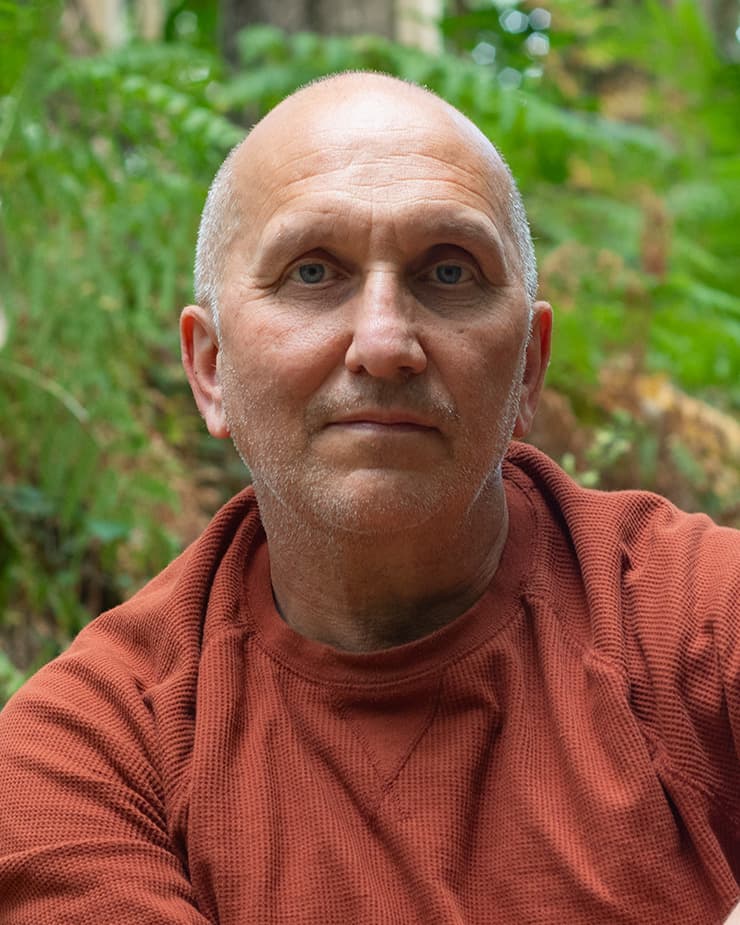
About Laurent
Laurent Roure has taught breathwork, pranayama, somatic movement and Yoga Nidra for twenty years.
He runs Terra Training Ltd, delivering professional certification programmes including a 100-hour breathwork and pranayama teacher training accredited by Yoga Alliance Professionals UK.
His teaching draws on classical pranayama in the Swami Gitananda lineage, alongside Buteyko, Feldenkrais, and Scaravelli-inspired yoga.
He works with private clients and in corporate and medical settings, and that shapes how he teaches here. This course moves between the classical depth of the Bihar School of Yoga and the evidence-based clarity he has built up over two decades, because that is what the range of people he has taught has needed.
What graduates say
Thank you to Laurent for such a deep and rewarding Yoga Nidra teacher training, accredited by Yoga Alliance Professionals. I loved learning the history of Yoga Nidra across different traditions as well as the science behind the practice. I particularly liked how much teaching practice we had, both in class and in the recorded assignments, so I feel very well prepared to run my own classes.
Jackie C
Yoga Teacher, London
Laurent has designed an excellent online Yoga Nidra training. I am inspired and learning more than I expected to, and I love making the recordings. I highly recommend this training.
Lucie O
Pilates Teacher, London
I recently completed the Yoga Nidra teacher training with Laurent via Zoom. I wanted a certified course, as my own school does not offer one. It is obvious that Laurent has been teaching yoga for decades and knows his craft. The course manuals are very well written and a real source of inspiration. After completing the course I feel competent and confident teaching in public, and my students love it.
Philippa T
Yoga Teacher, Isle of Man
Frequently asked questions
Everything you need to know
Not sure if this is right for you?
Book a free discovery call
A short conversation to answer your questions and help you decide whether this training suits you and the work you want to do.
Book a Discovery CallRelated training
Many of our students train in more than one discipline. If the breath calls to you alongside deep rest, explore our Breathwork and Pranayama Teacher Training →